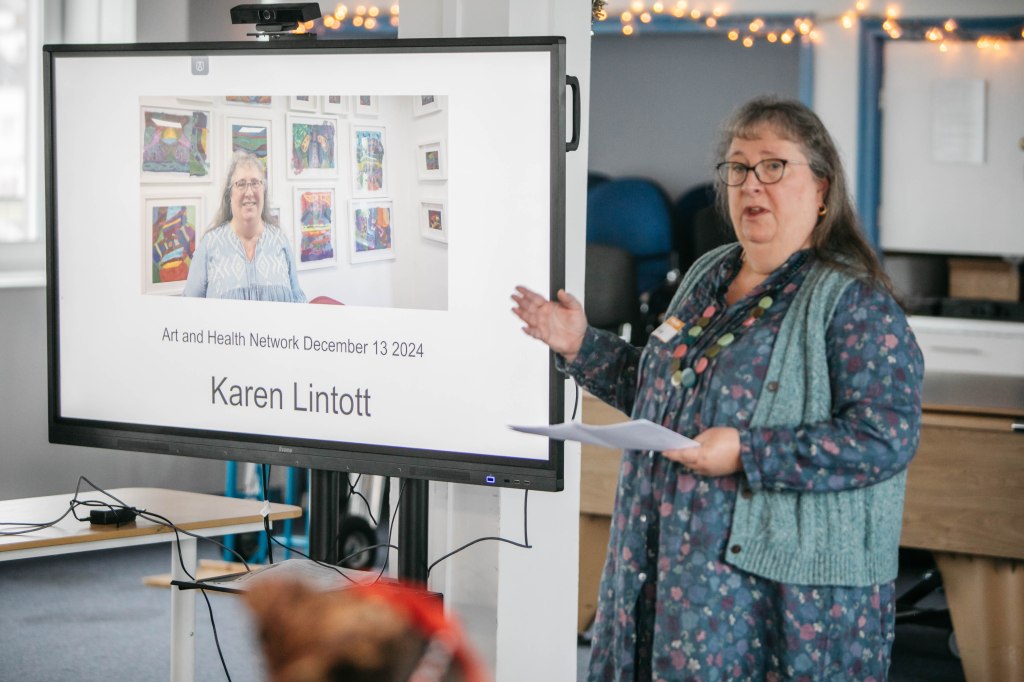
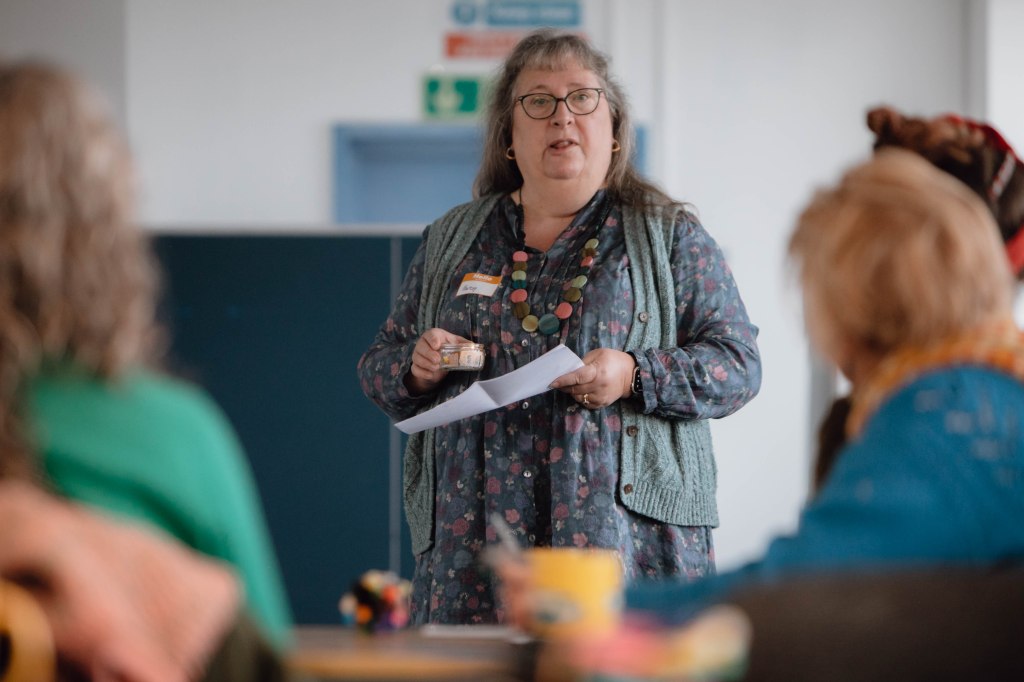
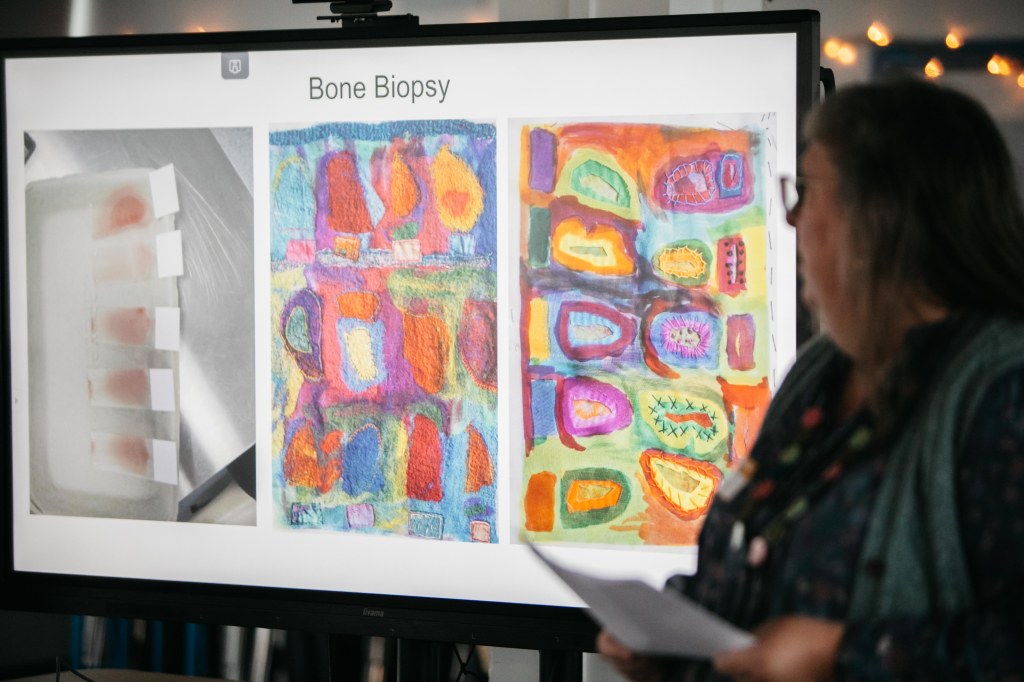
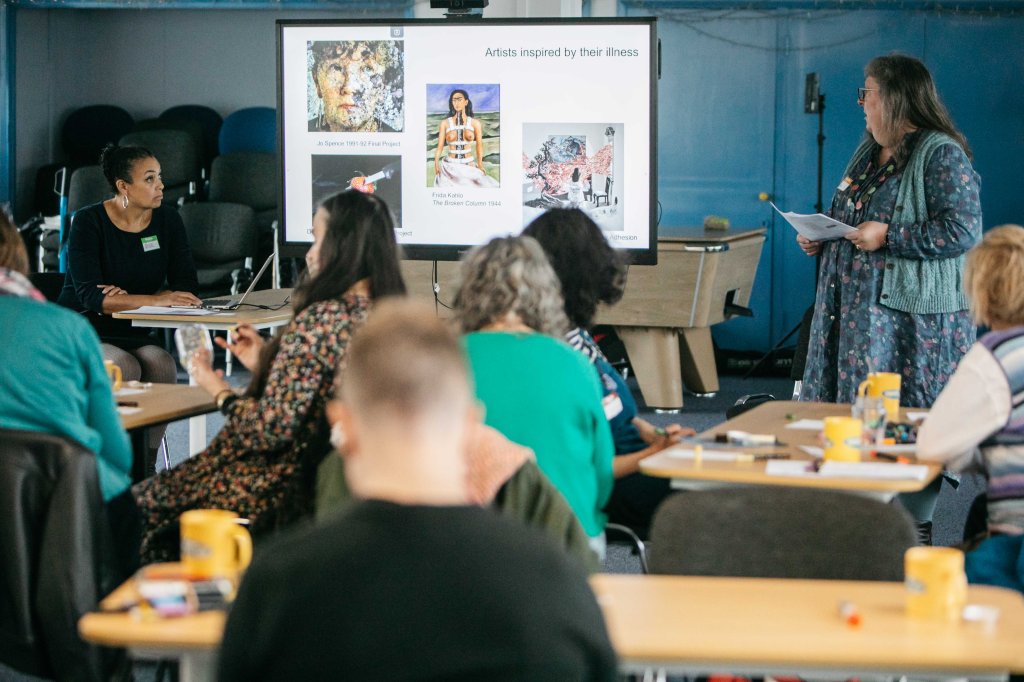
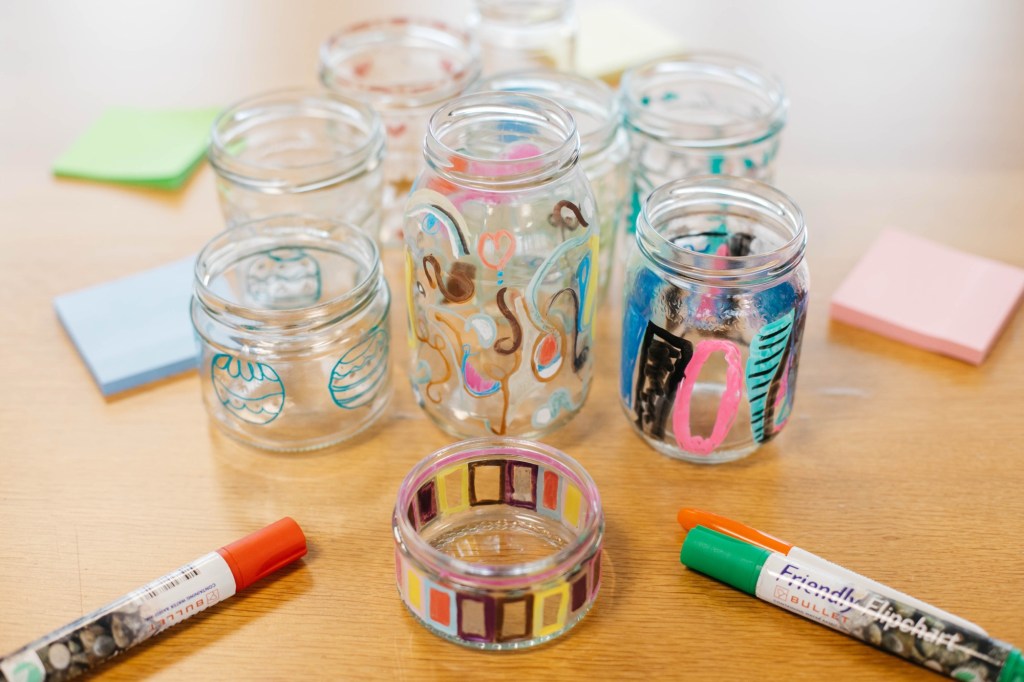
I discovered Brighton Art and Health Network during the pandemic. It was through them that I did the Flourish Artists training project in 2022 for artists to learn how to facilitate art and health workshops. I was asked to facilitate a workshop and talk about my journey into the Art and Health field for the December 2024 Art and Health Network meeting organised by Creative Future.
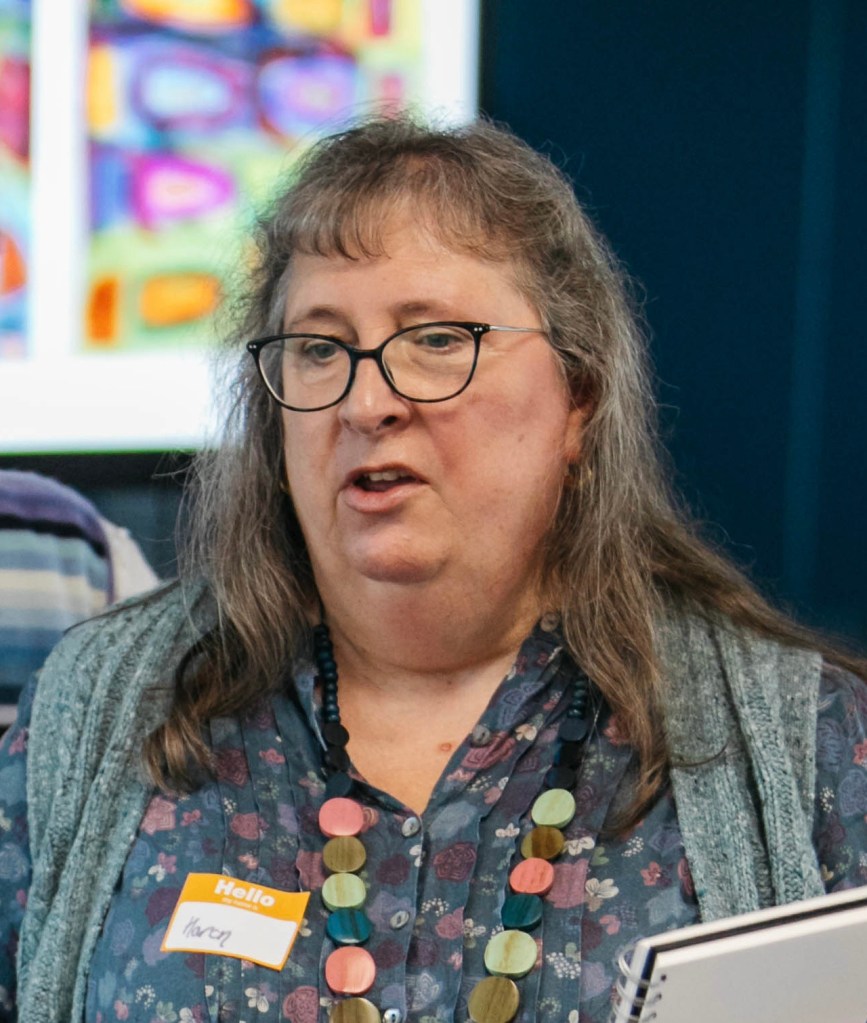
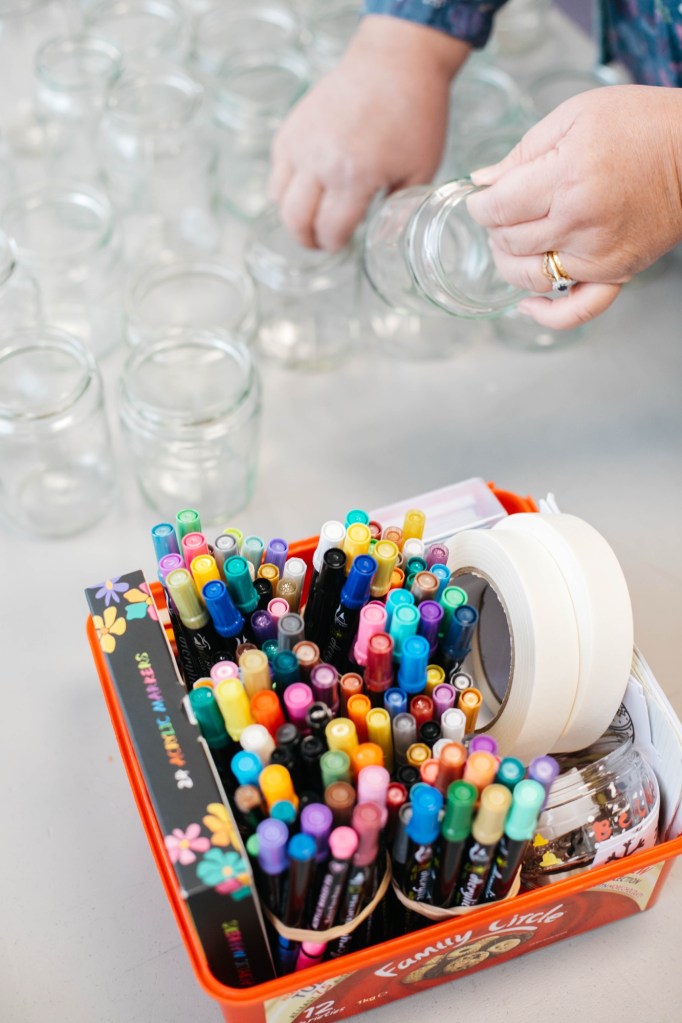
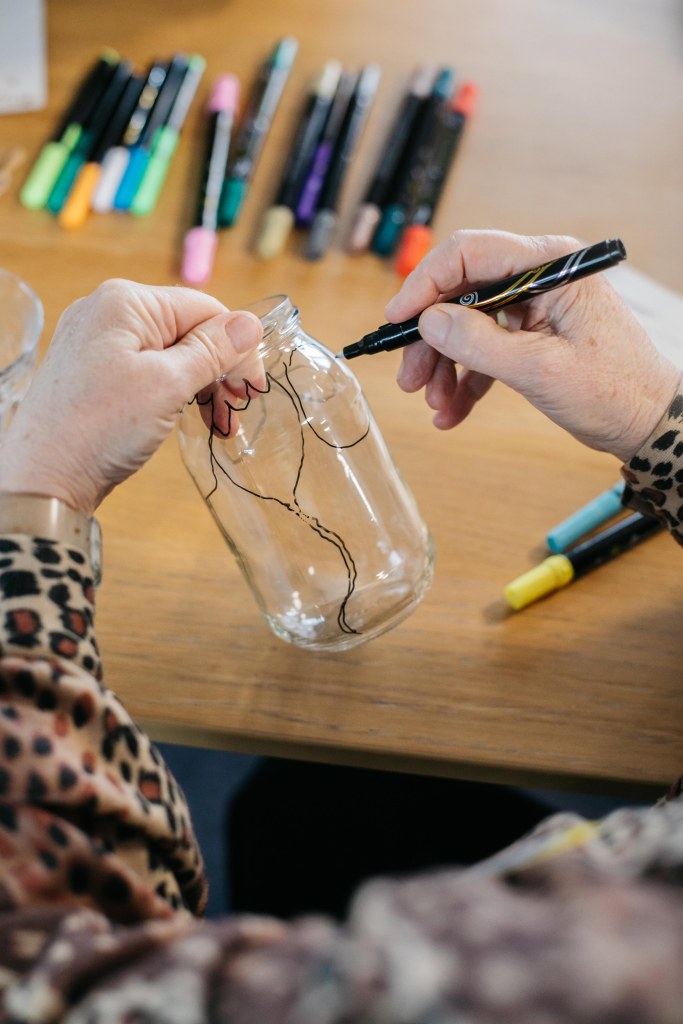
Below are some of the photographs from the work shop. Photographs by Diensen Pamben
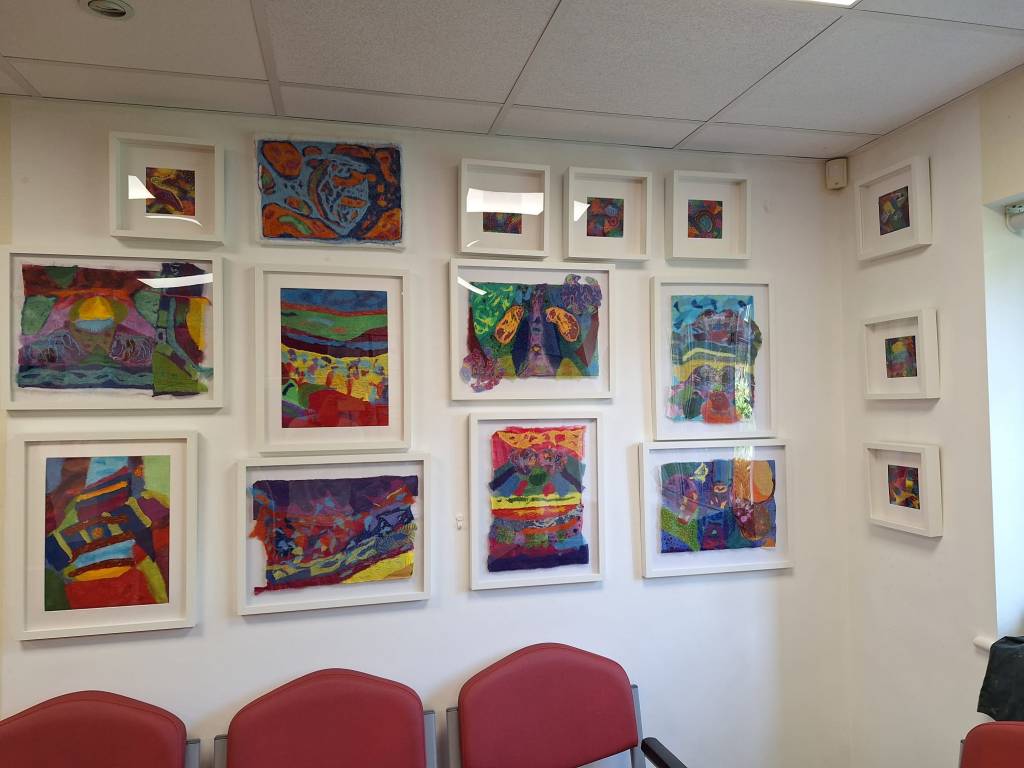
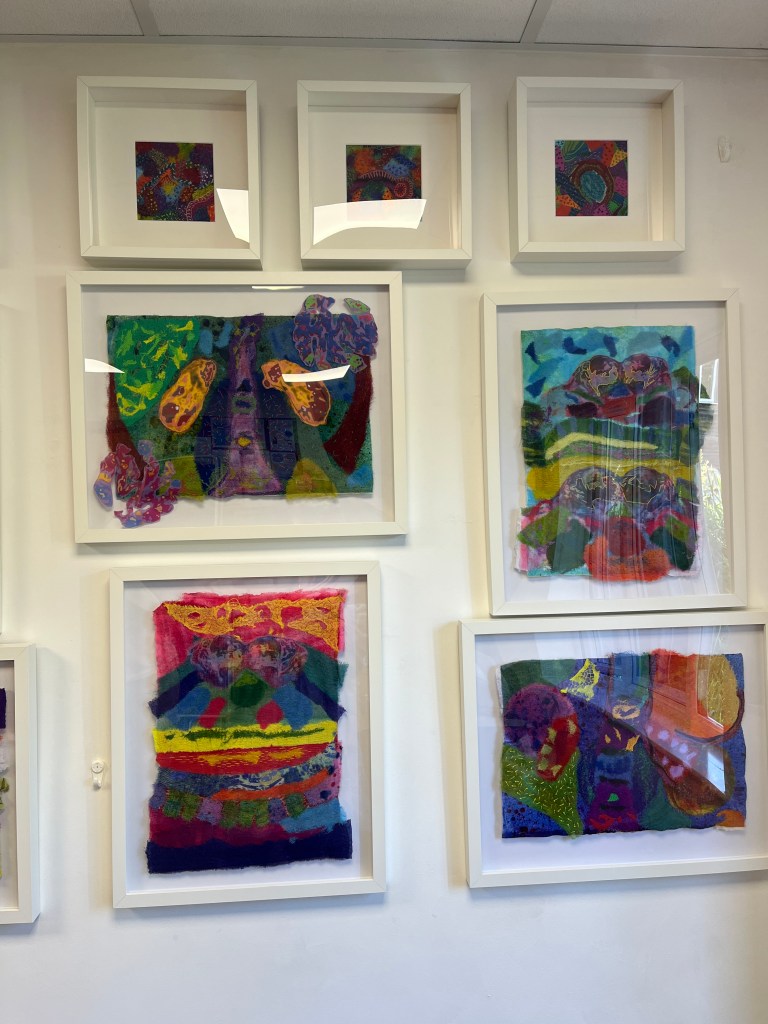
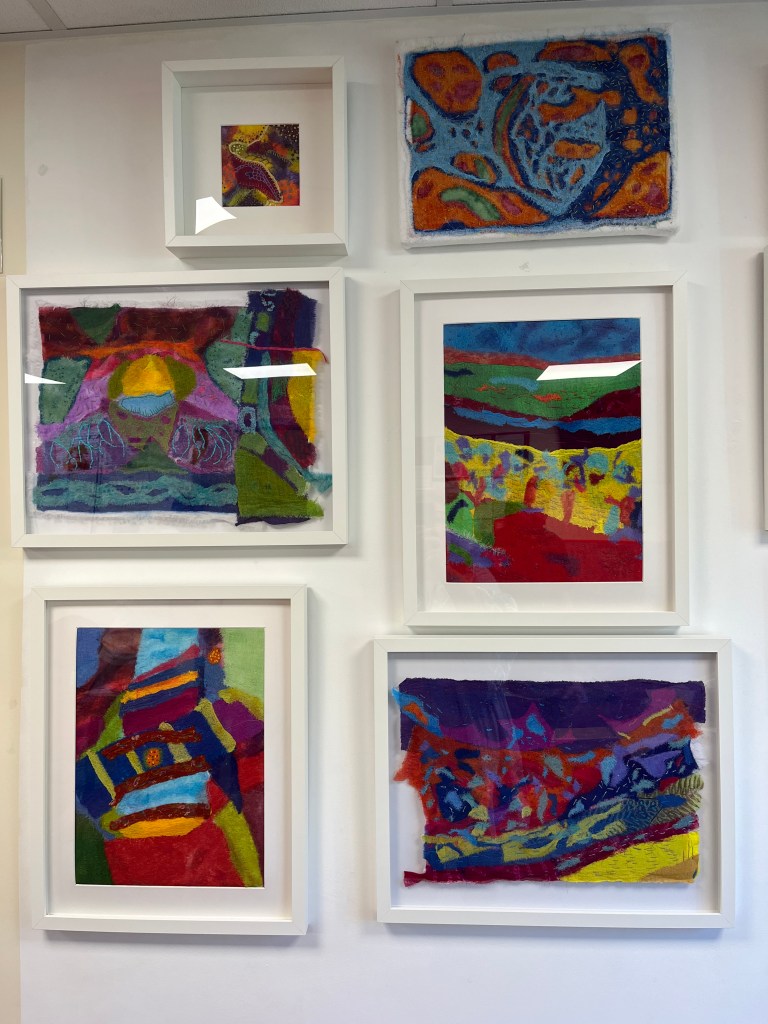
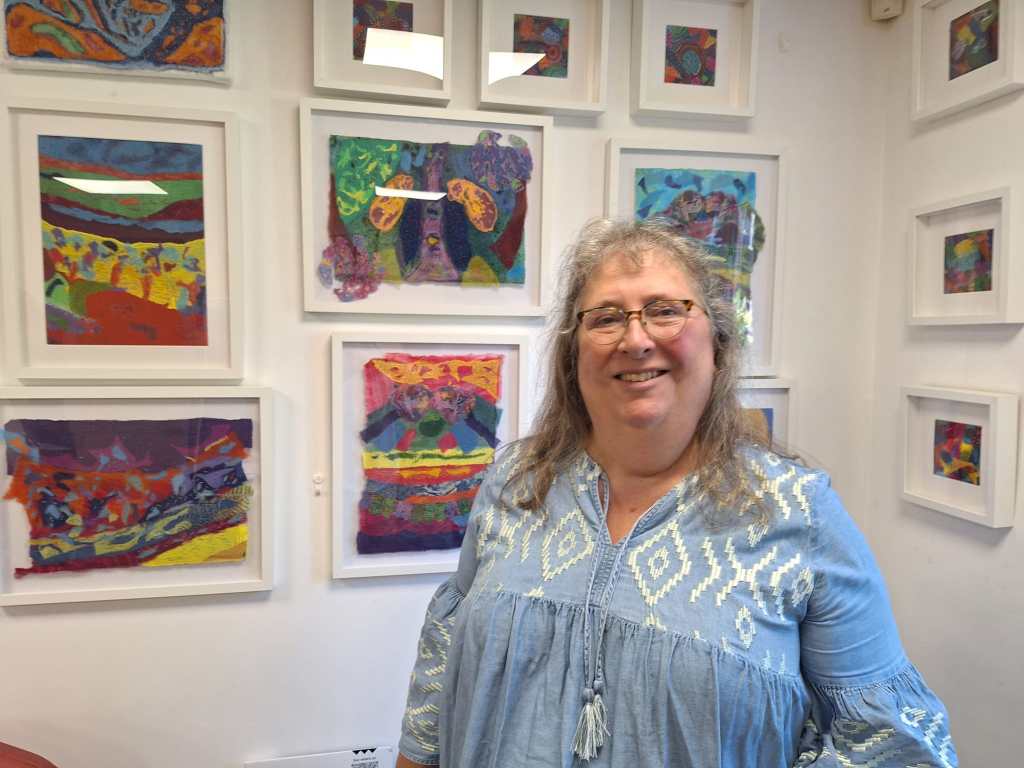
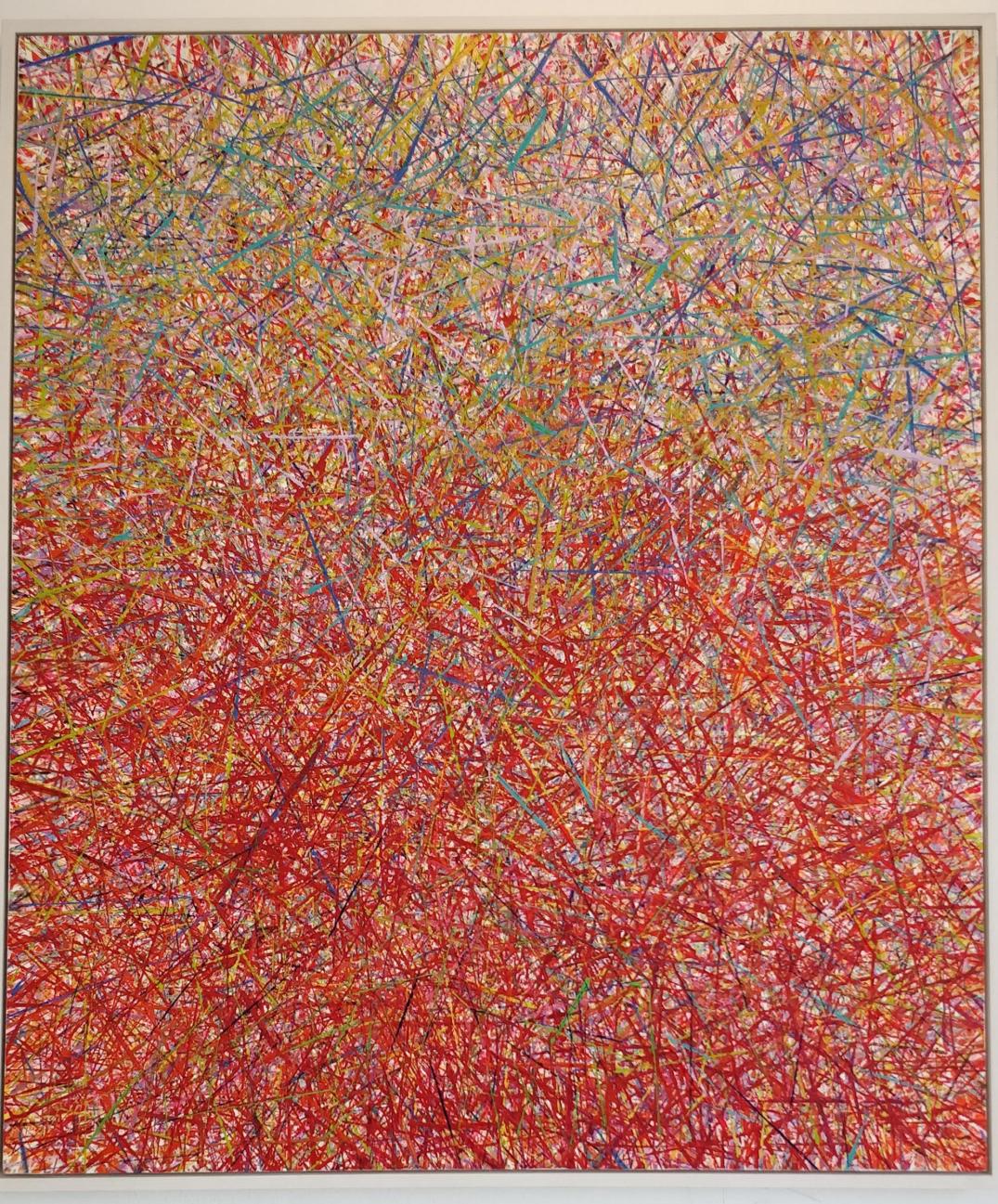
I was delighted to have my first solo exhibition at Wellsbourne Healthcare CIC, Brighton in August 2024. Some of the work exhibited was inspired by my MRI scans, so it seemed appropriate to be showing them in a health-centre.
Last week I was supposed to be in Galway at the 15th International Conference on the Arts in Society. Like most things these days it went virtual, so I spent the time watching video submissions from other participants. The conference concluded with a Zoom call with about 20 other participants. My only previous experience of academic conferences was the medical conferences I attended when I worked in the pharmaceutical industry. The human interaction of discussing shared interests was missing and hard to replicate online.
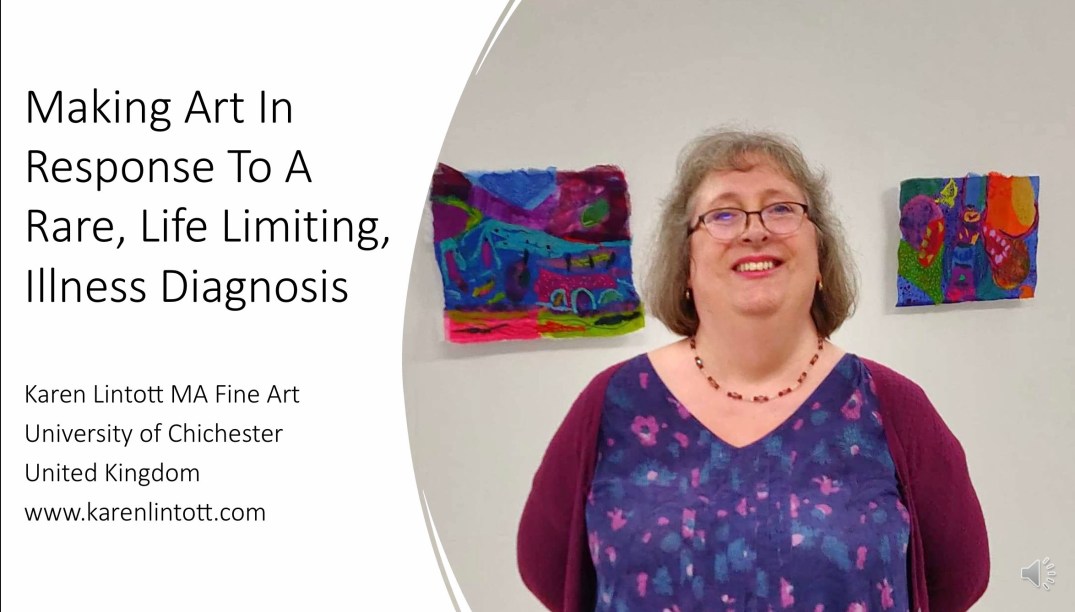
My talk was based on the paper I wrote for my MA.
Making Art in Response to a Rare, Life-limiting Illness Diagnosis ABSTRACT How does one comprehend and adjust to a diagnosis of a rare life-limiting illness? This paper discusses how I have used art to respond to a diagnosis of Amyloidosis. The discussion is set within the context of artists, Jo Spence, Robert Pope, Elizabeth Jameson, Deborah Padfield, and Eugenie Lee who made work in response to cancer, multiple sclerosis, chronic pain, and endometriosis diagnoses. The paper discusses how and what art can communicate about the experience of serious illness and will examine how (Murray & Gray, 2008) views on the psychology of health and (Carel, 2019) considerations of phenomenology can be used to interpret the experience of ill health for the individual. The paper will also consider how, if artwork is made as part of a healing or therapeutic process, it can also communicate something of the experience to others including clinicians, other patients, carers and the wider public. Set within current debate on the role of the arts in health and well-being, the paper considers how art can interpret and communicate the medical and personal reality of complex medical conditions and the experience of living with those conditions.
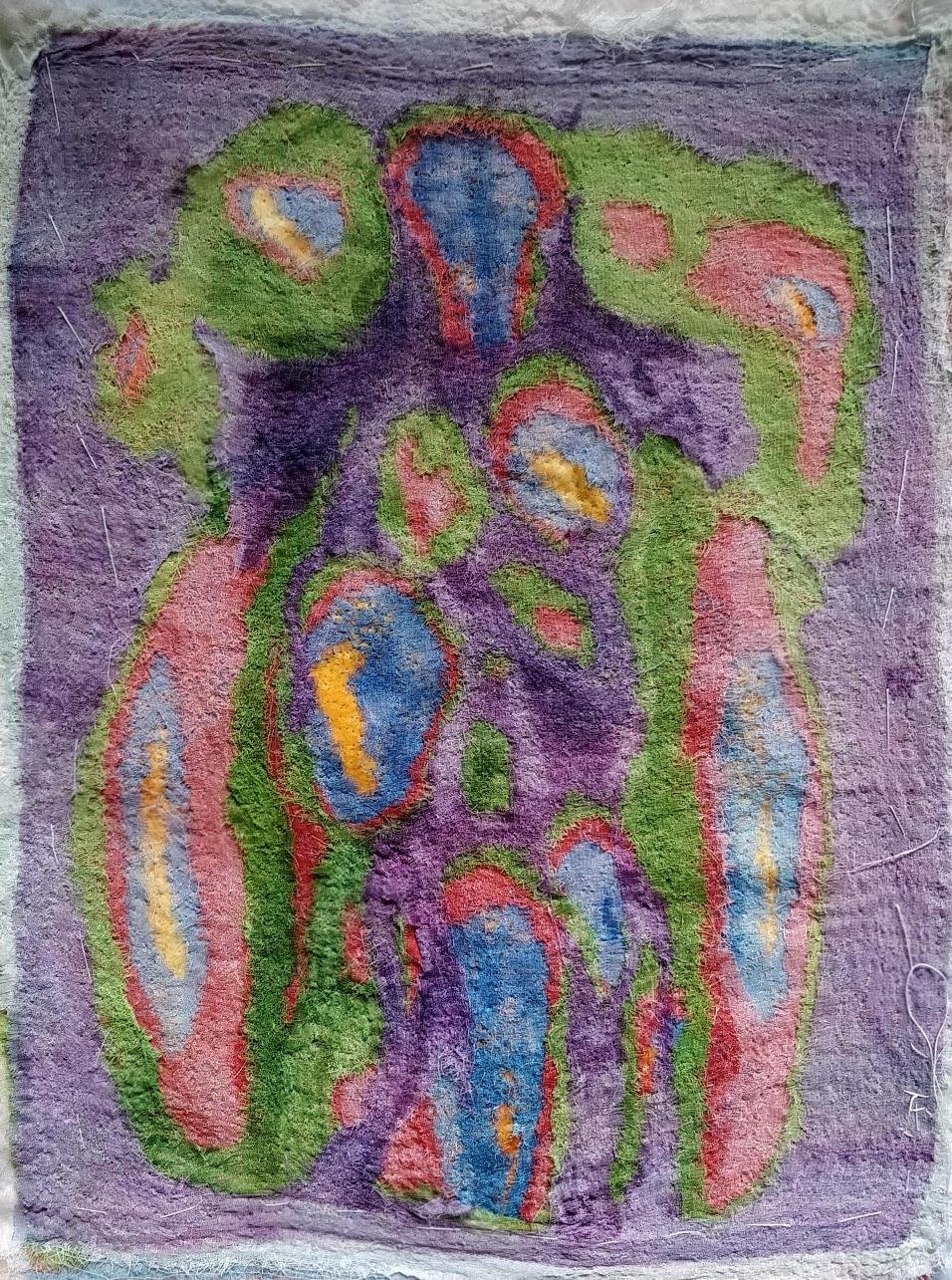
I had a MRI scan in January 2018 and these work in progress pieces are based on images from those scans. The fabric was heat press dye printed with an image of the MRI scan. The fabric was layered, cut and embellished to emphasise the image.
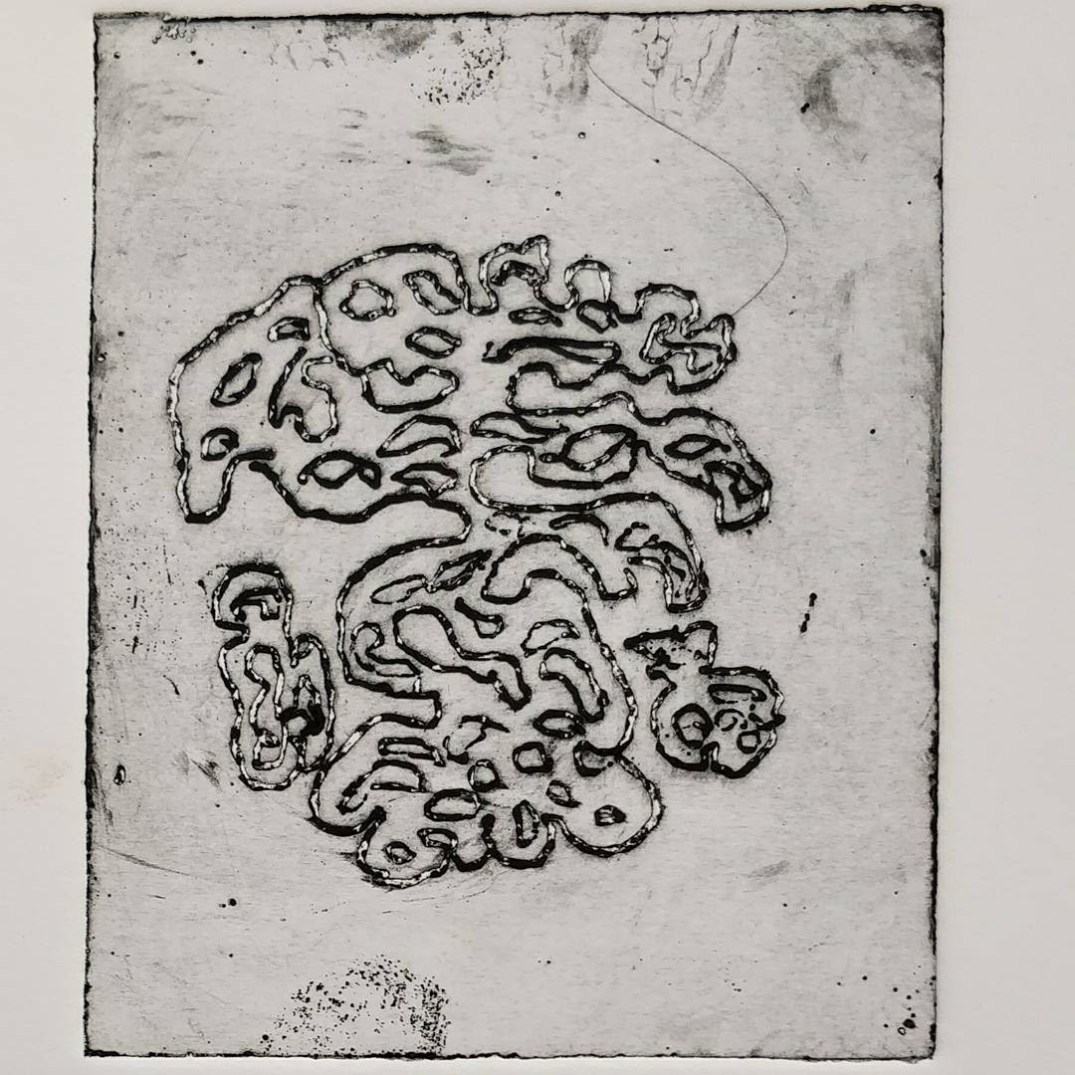
I’ve been spending time exploring a new technique for making work. This has been acid etching to make prints of my images. I have enjoyed the scientific approach to creating etchings but I still have issues with making clean prints. It also removes the possibility of lots of colour in the work.
Amyloid Etching
Cellular Etch
The Cellular etch was made by coating the plate with masking varnish and then dripping meths onto the plate to remove the varnish in an interesting way.






 Karen Lintott